Marketing Skills for AI Agents: Why Builders Should Care
- Stephen Jones
- January 27, 2026
Table of Contents
Builders are living in a weird new era.
An agent can scaffold a project, wire up an API, generate tests, refactor the mess, and ship a feature before you finish your second coffee.
Then you hit the real wall.
Nobody signs up. Nobody upgrades. Nobody sticks around.
Not because the product is bad, but because adoption is a different system than delivery.
Shipping is a throughput problem. Adoption is a persuasion + friction + measurement problem.
And that is why I’m increasingly bullish on a simple idea: if you are building with AI agents, you should also equip them with marketing skills.
Not “marketing” in the cringe sense. Marketing in the engineering sense:
- define the problem clearly,
- reduce uncertainty with evidence,
- iterate fast against a measurable goal.
That is growth engineering.
One of the cleanest examples I’ve seen recently is Marketing Skills for Claude Code: a set of skills that teach agents how to tackle marketing tasks like CRO, copywriting, SEO, analytics, and launches.
Let’s unpack why that matters, and how to use it without turning into a full-time marketer.
The adoption gap (and why agents make it worse)
AI coding agents multiply your ability to ship. That is fantastic.
It also creates a new failure mode:
- You can ship 10 features in a week.
- You can’t explain any of them cleanly.
- You can’t measure whether any of them helped.
- You end up guessing what to build next.
The agent is not the problem. The missing layer is.
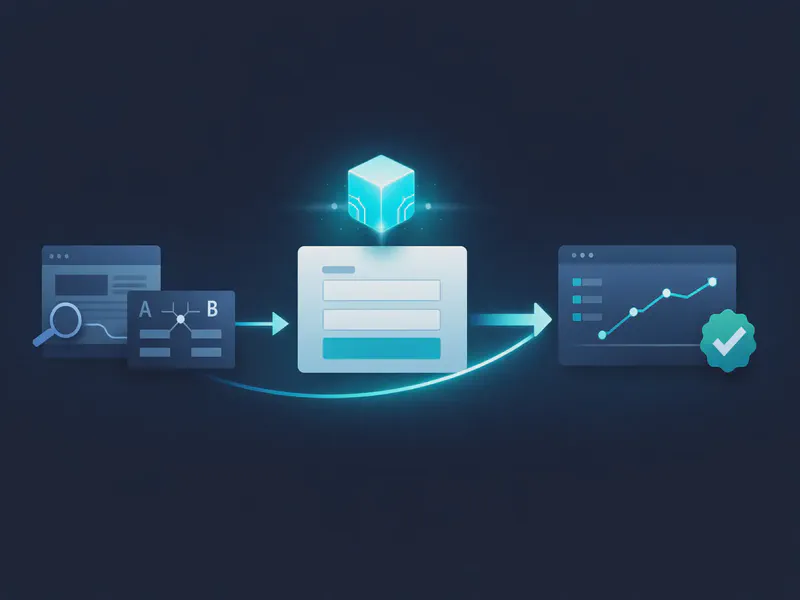
You need an adoption loop that is just as systematic as your dev loop:
- a strong message,
- low friction,
- clear measurement,
- repeatable experiments.
“Skills” are the missing abstraction
In the repo, a “skill” is basically a markdown playbook an agent can apply when it detects a certain class of task.
This matters because marketing work is usually:
- vague (“improve the landing page”),
- subjective (“this headline feels better”),
- and uninstrumented (“I think conversions are down?”).
A skill turns that into a workflow:
- ask the right questions,
- generate hypotheses,
- propose changes,
- define success metrics,
- run an experiment.
That is not fluff. That is engineering discipline, aimed at adoption.
The builder-friendly growth stack (four systems)
Here is the model I keep coming back to. Every “adoption win” tends to come from improving one of these systems:
1) Message (copy and positioning)
If people do not understand the value in 5 seconds, you are invisible.
Builder translation:
- tighten the problem statement,
- make outcomes concrete,
- remove ambiguous language,
- make the next step obvious.
2) Friction (CRO across the journey)
Conversion is rarely one thing. It is death by a thousand papercuts.
Builder translation:
- simplify decisions,
- reduce steps,
- remove cognitive load,
- earn trust earlier.
3) Measurement (analytics and experiments)
If you do not measure, you do not learn.
If you do not learn, you are just shipping vibes.
Builder translation:
- define events like you define APIs,
- validate data end-to-end,
- treat experiments as production systems.
4) Discovery (SEO, comparisons, distribution)
Adoption does not only happen on your homepage. People need to find you.
Builder translation:
- scale pages with templates,
- generate comparison pages without sounding insecure,
- add structured data like you mean it.
The growth engineering loop (stealable and repeatable)
If you do nothing else, steal this loop. Run it weekly.
Step 1: Pick one funnel step
Choose one bottleneck:
- landing → signup
- signup → first successful action
- activation → retention
- usage → upgrade
Step 2: Instrument it
Define events and ensure you can measure the step.
A practical minimum:
- view event (page load)
- intent event (click CTA)
- success event (signup complete)
- activation event (first value moment)
Step 3: Generate hypotheses
Force ranked suggestions by impact and effort.
Step 4: Ship one change
Not five. One.
Step 5: Validate with an experiment
If volume supports it, A/B test.
If it does not, use directional signals:
- cohort comparison,
- before/after with caution,
- session recordings,
- qualitative feedback.
Step 6: Write down what you learned
Treat learnings like documentation:
- what changed,
- what was expected,
- what happened,
- what you will try next.
Guardrails (so this doesn’t become AI-generated marketing sludge)
Agents can help you move faster. They can also help you ship nonsense faster.
Three rules that keep it sane:
- Agents generate options. Humans pick the bet.
- Never trust tracking until you validate it.
- Optimize for learning, not for “winning” an A/B test.
Final thought: marketing is a toolchain now
If you can treat infrastructure as code, you can treat adoption as code.
Not literally code, but as:
- workflows,
- playbooks,
- repeatable loops,
- and measurable outcomes.
Because in 2026, shipping is cheap.
Understanding why people adopt is the moat.